Harrenhal
A Clash of KingsHarrenhal is the vast fortress beside the Gods Eye, a place where military grandeur, political ambition, and historical destruction are fused into one oppressive image. Its walls are nearly impossible to ignore, yet the castle’s most decisive fact is not that it is strong: every generation remembers that its strength failed before dragons, and that the houses possessing it have repeatedly come to misfortune.
Construction and Historical Origin
Harrenhal was raised three centuries before the present struggle by King Harren the Black, when the Seven Kingdoms were still separate realms and the riverlands were ruled by the ironborn from the Iron Islands. Harren wanted the highest hall and tallest towers in Westeros. The project consumed forty years, and its cost was extracted from the surrounding country: Harren’s armies plundered stone, lumber, gold, and laborers; thousands of captives died in quarries, hauling sledges, or working on the five colossal towers; and the ancient weirwoods that had stood for three thousand years were cut down for beams and rafters. The castle therefore began as more than a stronghold. It was a monument built by impoverishing the riverlands and the Iron Islands alike.
Its completion became the first and most terrible irony in its history. On the very day Harren took residence in the finished castle, Aegon the Conqueror came ashore at King’s Landing. The fortress that had been designed to make its king untouchable could not protect him from an enemy who attacked from above. Harren and all his line perished in the fires that engulfed the keep, establishing the central legend of Harrenhal: thick walls and high towers are of little use against dragons, because dragons fly.
Appearance and Atmosphere
Harrenhal’s scale makes it deceptive from a distance. Approached across the countryside, its colossal curtain walls rise beside the lake as sheer and sudden as mountain cliffs. The battlements carry rows of wood-and-iron scorpions that appear no larger than the insects after which they are named, a visual measure of how enormous the fortress is. Its size produces awe, but not reassurance. The castle is remembered as a place built on fear, and its architecture preserves the violence that created it rather than concealing it.
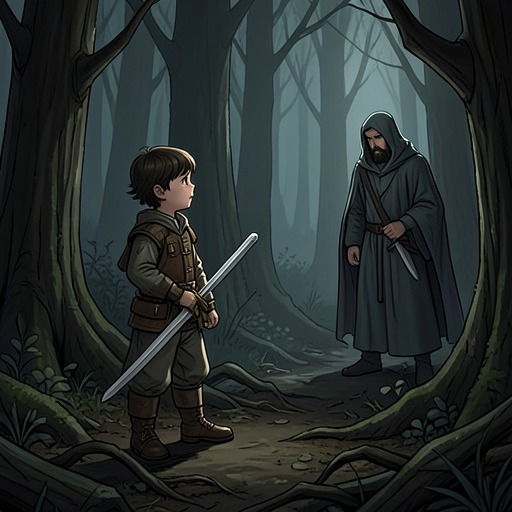
The castle’s reputation is reinforced by stories passed down through generations. Old Nan’s account, remembered by Arya Stark during the forced march toward the fortress, says that Harren mixed human blood into the mortar and that Aegon’s dragons roasted Harren and his sons within their supposedly impregnable walls. Whether treated as literal history or as inherited legend, the tale makes the approach to Harrenhal a psychological ordeal before the gates are reached. The captives tell one another that life will improve once they arrive, while Arya remains unconvinced, carrying the memory of the castle’s stories into the sight of its towers.
Harrenhal in the War
The fortress becomes a strategic temptation during the conflict between Robb Stark and Tywin Lannister. After Robb’s victories in the Whispering Wood and the Battle of the Camps, Lord Tywin remains at Harrenhal rather than advancing as the queen commands, angering Cersei Lannister. Brynden Tully warns that Tywin wants Robb to march against him on ground of Tywin’s choosing. Harrenhal thus functions not only as a fortress but as a lure: its symbolic importance and apparent impregnability threaten to draw an ambitious young king into a battle shaped by his enemy.
Catelyn Stark does not want Robb to fight in the shadow of the keep. The castle’s physical strength is accompanied by the memory of the dragon attack that defeated it, and its dark reputation makes it a poor setting for a reckless confrontation. Yet the northern campaign cannot simply ignore it. The threat around Harrenhal is connected to the wider military system of the war, including the gathering of a new host at Casterly Rock and Tywin’s ability to raid, burn, and maneuver from a central stronghold.
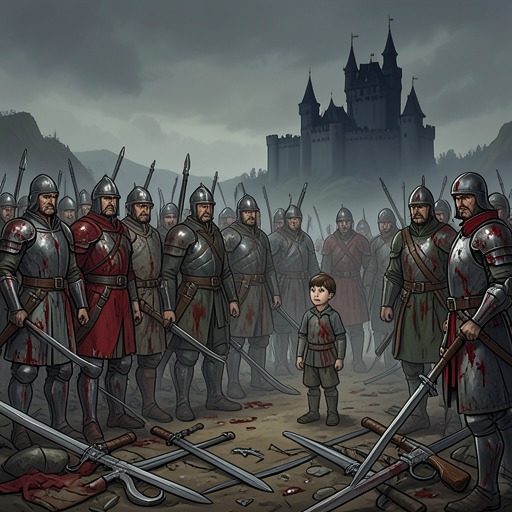
The fortress also marks the changing control of the riverlands. When Roose Bolton and the Brave Companions seize Harrenhal from Ser Amory Lorch, the Lannister lion and Amory’s black manticore are pulled down from the ramparts. In their place rise the flayed man of the Dreadfort and the direwolf of House Stark. The change of banners is immediately followed by public degradation and death: Ser Amory is paraded naked through the middle ward, sobbing and clinging to his captors, before Rorge pulls him away and Shagwell kicks him into the bear pit. Arya Stark, serving wine under the name Nan, watches from within this new order and manages not to spill a drop. Harrenhal therefore turns conquest into spectacle, making a prisoner’s humiliation as visible as the political transfer announced by the banners.
Symbol of Power and Ruin
Harrenhal exposes the instability beneath claims of sovereignty. Robb Stark’s newly forged crown is modeled on the lost crown of the Kings of Winter, and his declaration that the north and the riverlands form a free and independent kingdom defines rule through ancestral memory and territorial borders. Against that claim stands the broader history of conquest represented by Aegon’s destruction of Harren’s realm. The castle is a reminder that dynasties present themselves as permanent while the structures they build can be overturned in a single day.
Theon Greyjoy’s reflections place Harrenhal within another failed political inheritance. Aegon destroyed the Old Way by burning Harren the Black, returning Harren’s kingdom to the rivermen, and reducing the Iron Islands to a minor part of a larger realm. Lord Balon Greyjoy later rebelled in an attempt to restore that older order, but Robert Baratheon and Eddard Stark defeated him. For Theon, the fragmentation of the realm after their deaths appears to create the opportunity that Harren’s defeat once closed. The castle’s history consequently becomes part of the argument by which a new generation imagines that old kingdoms can be recovered.
Renly Baratheon invokes the same history from a different direction. He argues that Robert won the Iron Throne with his warhammer rather than through the genealogical reasoning valued by maesters, and he compares his own claim with Robert’s. He tells Catelyn that Robb may keep his lands and titles, and even retain the name King in the North, provided that he bends the knee and offers fealty. The earlier submission of a Stark king to Aegon, when resistance was hopeless, becomes Renly’s example of political wisdom. Harrenhal’s story thus supplies competing lessons: power may be inherited, revived, negotiated, or destroyed, but no claim survives merely because its claimant believes in it.
Narrative Significance
Harrenhal is a Gothic image of history made architectural. Its immense walls promise safety while its origin in forced labor, its destruction by dragonfire, and the misfortunes of later occupants turn the promise inside out. The fortress creates a form of dread that begins before any visible attack: travelers remember what happened there, and the reader knows that the castle’s scale cannot guarantee control. Its grandeur generates awe, but its historical memory converts awe into foreboding.
The castle also concentrates the novel’s recurring contrast between symbols and material force. Crowns, banners, royal claims, and ancestral titles attempt to make political identities appear natural and enduring. Harrenhal answers them with a structure that once seemed to embody permanence and now stands as evidence of sudden collapse. It can shelter an army, host prisoners, and display a new banner, yet its defining lesson remains unchanged: power that depends on walls, lineage, or magnificence may be undone by a force it failed to imagine.